

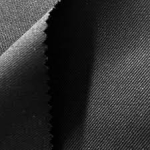

When buyers compare Carbonlene Fireproof Fabric, they are usually balancing safety, weight, and installation behavior. A second reason teams specify Carbonlene Fireproof Fabric is its ability to support demanding projects where stability matters as much as thermal resistance. In practice, the best material is not the one with the loudest claims, but the one that stays consistent through cutting, sewing, mounting, and long-term service.
1. Understanding the Material Architecture
A technical textile begins with structure. Fiber makeup, yarn density, and surface finish all influence how the material reacts during fabrication and in use. If the weave is uneven, the product may look acceptable at a glance but behave unpredictably once it is cut or stitched. A stable construction helps the cloth keep its shape, resist edge distortion, and remain manageable for production teams.
Buyers often focus on headline specifications, but the sample itself tells a more complete story. A good piece should feel balanced in the hand and show the same character across the roll. Small changes in thickness or texture can create bigger problems later, especially when the material is used in large quantities. That is why sample review is more valuable than a quick brochure comparison.
2. How the Textile Behaves During Conversion
Processing behavior matters because manufacturing is where many materials succeed or fail. A cloth that feeds cleanly through cutting machines, sewing equipment, or lamination lines reduces waste and avoids labor delays. If the surface is too slippery or the body too stiff, production can become slow and inconsistent. That inefficiency adds cost even when the purchase price looks attractive.
In conversion work, the ideal material should support predictable handling. It should hold a crease when needed, release tension when required, and avoid excessive fraying at the edges. These qualities make it easier to assemble finished products that look tidy and perform well. A fabric that creates fewer interruptions on the line often saves more money than a cheaper option that constantly demands correction.
3. Matching Performance to End Use
Different projects place very different demands on a textile. Some applications require greater flexibility, while others need better dimensional control. A material used in protective interiors may need to hang cleanly and keep a smooth finish, while one used in industrial assemblies may need firmer body and more resistance to wear. The correct choice depends on the worksite, the production method, and the lifespan expected by the buyer.
Environmental factors also matter. Humidity, repeated cleaning, pressure during storage, and frequent handling all affect long-term performance. A product that survives one test may still underperform after months of real use if it was not selected with the full environment in mind. Careful matching of material characteristics to the final purpose reduces replacement cycles and helps avoid disappointing results after installation.
4. Black-Fire Testing Notes for Procurement
Testing is the most practical way to confirm that a sample will perform outside the catalog. Teams should examine surface stability, color uniformity, edge behavior, and how the material changes after folding or moderate stress. If a sample curls, sheds, or shifts too much, that is a warning sign that production may become difficult later.
It helps to compare multiple samples under the same conditions, because slight variation can reveal larger consistency issues. Procurement teams should also review whether the material remains dependable after cleaning or storage exposure, since those factors often determine whether a product can hold up in daily operation. Documentation supports the decision, but the physical result remains the strongest evidence. Good procurement is not simply about buying a material; it is about buying fewer surprises.
5. Long-Term Value Beyond the First Order
The best purchasing decision is usually the one that continues to pay off after delivery. A material that lasts longer, installs more smoothly, and needs less replacement creates better total value than a cheaper option that causes ongoing problems. Long-term value also includes ease of maintenance, consistency from batch to batch, and how well the material supports future orders with similar requirements.
Planning should extend to storage, handling, and reordering. If the material is easy to inventory and simple to process, the entire operation becomes more efficient. That kind of stability matters to manufacturers, fabricators, and project managers who want predictable results instead of repeated troubleshooting. For current product details, sample requests, and purchasing information, the product page is https://www.black-fire.net/product/ .